
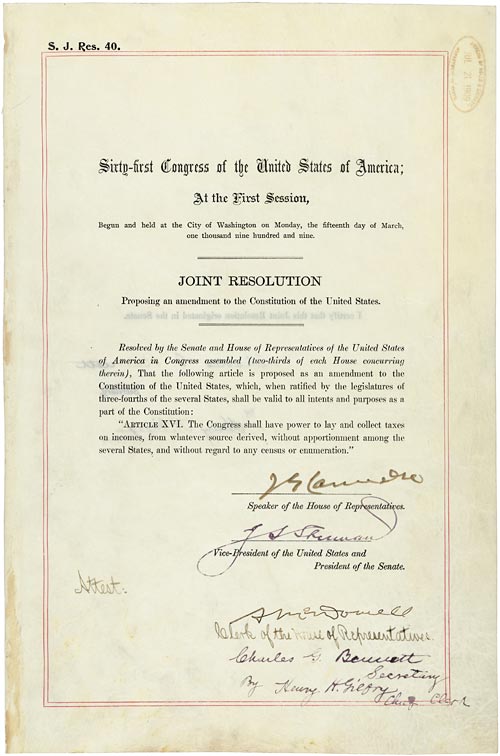
The primary purpose of federal income taxes originated from the government’s need to fund World War I. Before that, the U.S. government relied primarily on tariffs and excise taxes.
What Are Tariffs and Excise Taxes?
-
Tariffs are taxes levied on imported goods — designed to make foreign products more expensive and encourage Americans to buy domestic.
-
Excise taxes are taxes on specific goods like alcohol and tobacco — intended to discourage certain behaviors while generating revenue.
Why Did Federal Income Taxes Start?
During World War I, the cost of war overwhelmed the revenue from tariffs and excise taxes. The U.S. government needed a new, reliable funding source. This led to the 16th Amendment in 1913, which authorized federal income taxes. Initially, income taxes targeted only wealthy individuals and businesses, with rates ranging from 1% to 6%.

What is FICA and Why Does It Matter?
FICA stands for the Federal Insurance Contributions Act. It requires employers and employees to contribute to Social Security and Medicare programs.
-
Social Security Tax – A percentage of wages, matched by your employer, funds Social Security benefits for current retirees and beneficiaries.
-
Medicare Tax – A smaller percentage funds Medicare healthcare for older Americans.
FICA represents a system where workers actively contribute to their own future financial and healthcare needs. Understanding this — and how corporate structure can legally reduce your FICA exposure — is one of the most powerful moves a business owner can make.
The Creation of the Social Security Number
The SSN was created in 1936 as part of the Social Security Act to track individuals’ contributions to the Social Security program. It was never intended to be a universal identifier — but over time, it became one. Understanding this distinction matters when you’re structuring your business to separate personal and corporate identity.


