
Let me make this plain.
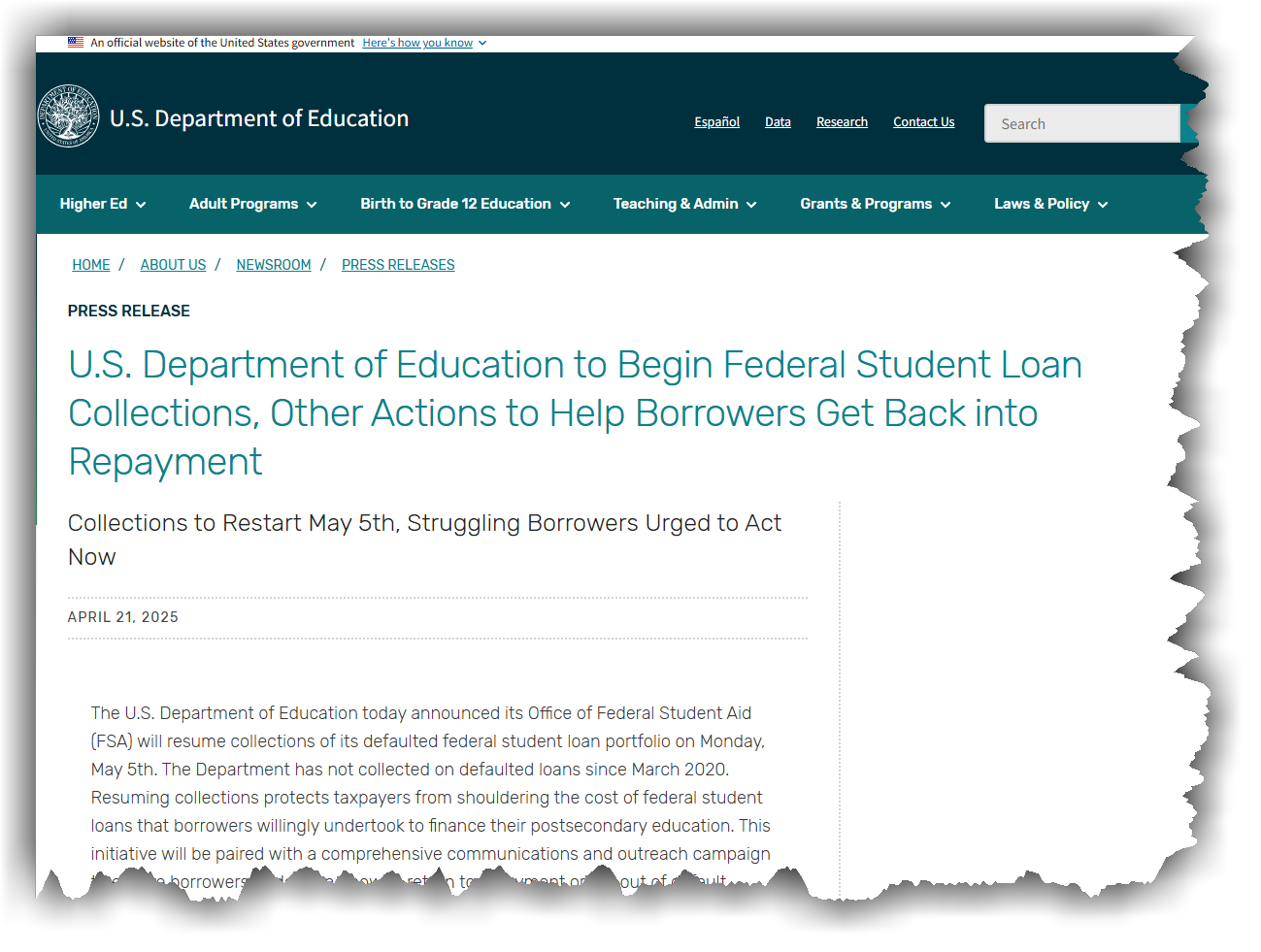
The Department of Education announced that on May 5, 2025, they will restart involuntary student loan collections. If your loans are in default, they’re not going to ask nicely. They’re going to garnish your wages, seize your tax refund, and take your Social Security—legally. And if your business is still filed under an LLC with a Schedule C, your business income is not safe.
This is not theory. This is federal law.

📌 Who This Applies To
This affects borrowers with defaulted student loans under any of the three federal loan programs: the William D. Ford Direct Loan Program, the Federal Family Education Loan (FFEL) Program, and the Federal Perkins Loan Program.
⚠️ What Happens When You Default
Once you default, your entire balance is immediately due. The government then moves in to collect by:
-
Seizing your income tax refunds
-
Withholding Social Security or disability payments
-
Garnishing up to 15% of your disposable wages
-
Reporting negative credit
-
Offsetting state tax refunds
And if your business is tied to your SSN and you’re filing with a Schedule C, they can come for that money too.
💡 The Problem with LLCs
LLCs are state-level entities. The problem? Student loan collections are federal. When you file taxes on a Schedule C, you’re telling the IRS, “This business is just me.” And now your business income becomes your personal income. That’s why your bank account, merchant deposits, and income streams are on the table if you’re in default.
🚩 And It Gets Worse: The S-Corp Myth
People love to say, “Well I don’t have an LLC, I set up an S-Corp.” Let me be blunt: There’s no such thing as opening an S-Corp. S-Corp is a tax election, not a business structure. And when you make that election, you’re required to be an employee of your business — meaning you must be on payroll, and those wages are subject to garnishment.


