
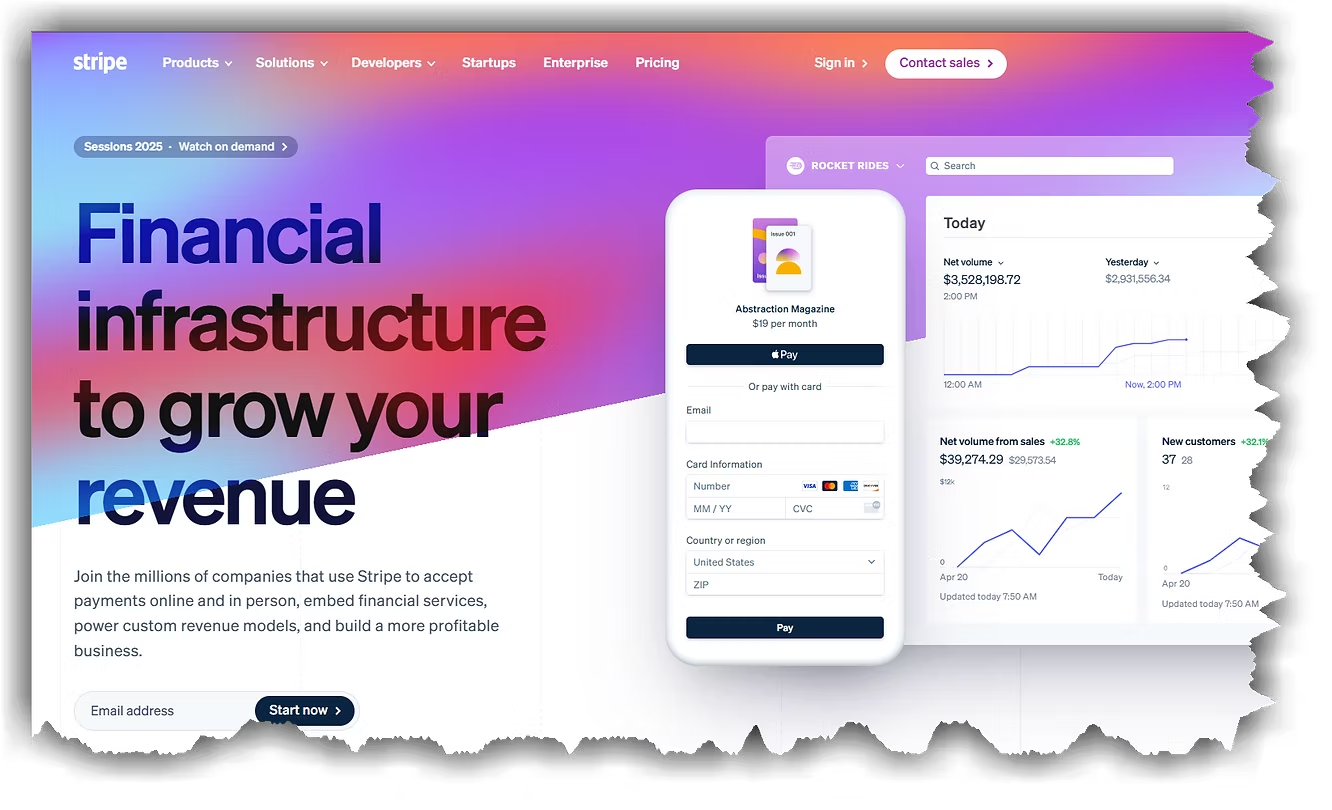
There’s a massive amount of confusion when it comes to opening a Stripe account. Even worse, some business owners are seeing their accounts flagged or shut down. Let’s clear this up once and for all.
Too Long; Didn’t Read.
- Stripe is for real businesses. You must be selling a real product or service.
- The price of your product/service must match what you invoice and charge through Stripe.
- Do not use keywords like “Real Estate,” “Investment,” or “Trust.” These industries are on Stripe’s prohibited/restricted list and get flagged.
- Every company in the Legacy Builder needs its own EIN, bank account, Stripe account, business email, and website/landing page.
- Stripe is not for individuals looking for quick money—it’s for business owners running C-Corps.
- Why C-Corps? Because they are treated as separate legal persons. That means no personal credit check when building funding strategies with Stripe.
What Stripe Really Is
Stripe is a payment processor for businesses.
It lets businesses accept debit, credit, ACH, and other payments online. But here’s the key:
👉 To open a Stripe account, you must be running a business that sells products or services.
If you are not a business owner, Stripe is not for you.
What You Need to Open a Stripe Account
Here’s the bare minimum you must have in place:
- Business info: Your legal business name, EIN, business bank account, phone, and physical address. These must line up with your registration records.
- Business email (domain-based): No Gmail, Yahoo, or AOL. Your email should match your company website (example: info@yourcompany.com).
- Website or landing page: Must clearly show the products or services you sell, with listed prices that match your invoices and Stripe transactions.
- KYC verification (Know Your Customer): Stripe is required by law to verify that you and your business are real. This means you’ll need to provide:
- Personal details: Full legal name, date of birth, home address, Social Security Number (last 4 digits in the U.S.), and sometimes a government-issued ID.
- Business details: Legal business name, EIN, address, phone, email, and a working website that matches your service.
- Bank account details: Business bank account in the same name as your company, plus routing and account numbers for payouts. Stripe may request a voided check or bank letter.If the information doesn’t line up, Stripe will flag your account—so consistency is everything.
⚠️ Important: Once your Stripe account is open, you cannot change its country. If you want to use Stripe in another country, you must create a new account in that country.
Why People Get Flagged
There are two main reasons:
- Wrong Business Type
- Stripe prohibits certain industries and restricts others.
- Words like “Real Estate,” “Investment,” and “Trust” trigger reviews because those industries are on Stripe’s prohibited/restricted list.
- Even if you’re legit, the wording alone can cause issues.
- Website Mismatch
- If your site says one thing but your invoices say another, Stripe sees that as a red flag.
- Example: If your invoice says “Consulting Services – $500,” your site must also show “Consulting Services – $500.”
Prohibited & Restricted Businesses

Here are just a few industries Stripe does not support:
- Adult content or services
- Gambling or casinos
- Marijuana/cannabis
- Lending or debt collection
- Shell corporations
- Content creation platforms (like Stan.store, OnlyFans-style models, etc.)
- Investment services
- Real estate-related offerings
👉 That’s why using words like “real estate,” “investment,” or “trust” will often get you flagged.
For the full list, check Stripe’s Restricted Business List.
Why I Teach C-Corps (Not LLCs or S-Corps)
This is where most people get it wrong.
- If you have a pass-through business (LLC, partnership, or S-Corp), Stripe has the right to check your personal credit and even hold you personally liable in case of default.
- That’s because your business income flows directly to your personal tax return.
But a C-Corp is different.
- A C-Corp is considered a separate U.S. legal person.
- That separation means your personal credit does not get pulled when running funding strategies with Stripe.
- This is the core reason I teach C-Corps for business funding.
⚠️ Note: Applying for Stripe Capital may sometimes involve a credit check depending on your business and history—but structuring as a C-Corp removes you from the automatic personal liability that pass-through businesses create.
The Legacy Builder Method
Every company in the Legacy Builder structure has:
- Its own EIN
- Its own bank account
- Its own Stripe account
- Its own business email (domain)
- Its own website or landing page

And each company is positioned as a consulting business for Stripe purposes.
From there, we use B2B transactions to show activity across all entities.
Example:
- Operating Company deposits $1,000.
- Parent Company invoices the Operating Company.
- Property Management Company invoices the Parent Company.
- Holding Company invoices the Property Management Company.
Now, each entity shows processed revenue. Do this for 3 months, and you’re positioned for Stripe funding eligibility—without touching your personal credit.
Bottom Line
- Stripe is for businesses only.
- You must sell real products or services, and your site must match your invoices.
- Avoid restricted keywords like real estate, investment, or trust. Position your businesses as consulting companies.
- Pass-through entities (LLCs, partnerships, S-Corps) will tie Stripe to your personal credit.
- A C-Corp is the only structure that allows you to build funding strategies without your personal credit being checked.
This isn’t a shortcut. It’s not a get-rich-quick scheme. It’s business done the right way.


